This post contains affiliate links. #ad
By Susan Volk, BURST Ambassador, RDH — Last updated August 19, 2026
Short answer: A good electric toothbrush comes down to five checkable things — bristle softness, pressure feedback, timer/pacing, battery reliability, and total cost of ownership — and you can apply this checklist to any brush on the market, including the one you’re currently using.
The five-point checklist
- Bristle softness — does it flex under light pressure without feeling stiff against the gumline?
- Pressure feedback — does the brush actually respond when you push too hard, or is that just marketing copy?
- Timer and pacing — a 2-minute timer with interval pacing (usually every 30 seconds) supports even coverage across all four quadrants.
- Battery reliability — how long between charges, realistically, not just the box claim?
- Total cost of ownership — brush price plus a year of replacement heads, not just the sticker price.
Applying it to the Burst lineup
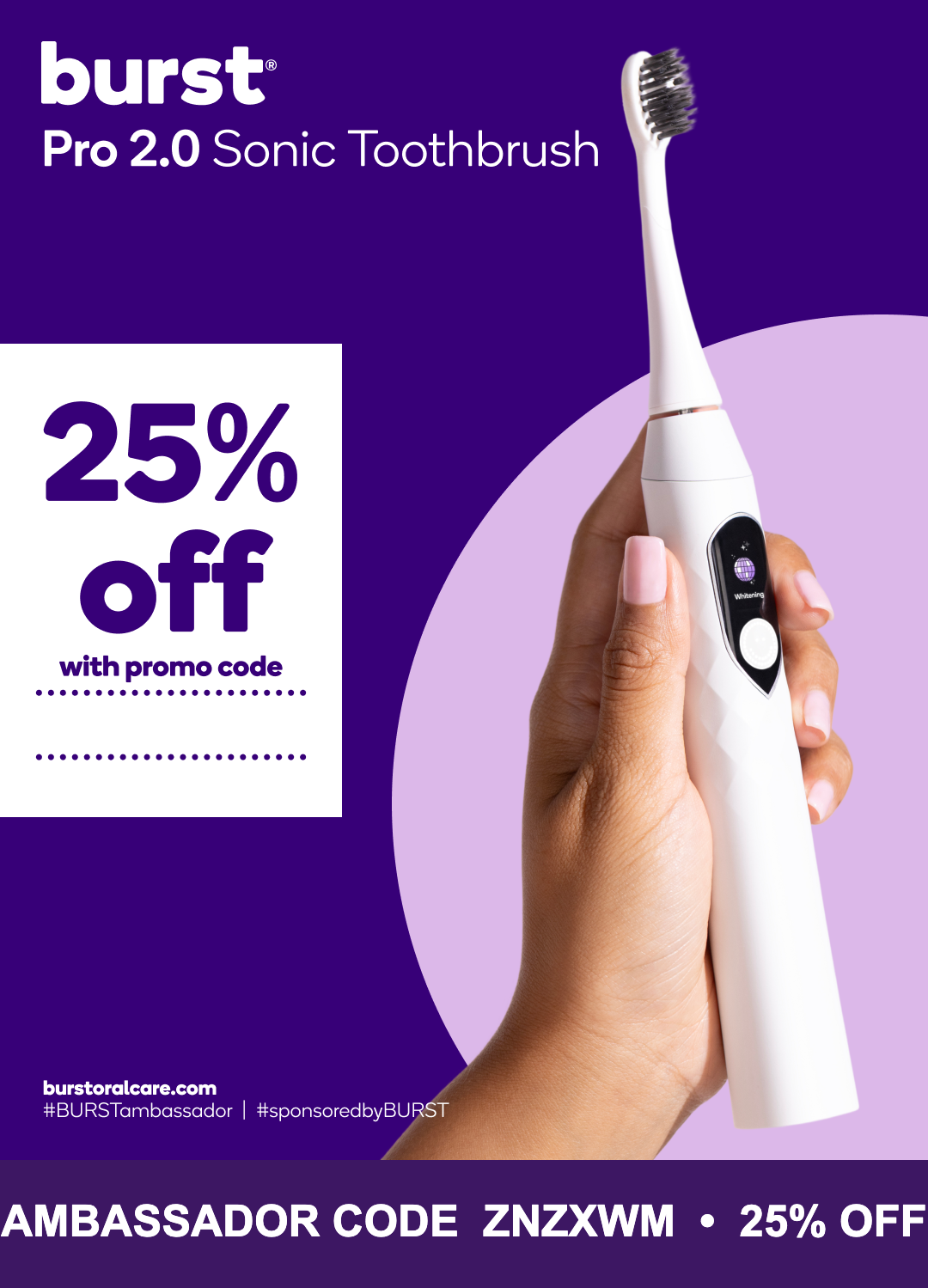
- Pro 2.0: full feature set — 9-month battery, 5 modes, pressure sensor, scoring system. Best for a primary home brush.
- Curve: 75-day battery, 2 modes (whitening & sensitive), travel cap. Best for travel or ortho/aligner patients.
- Nova: 18,000 vibrations/minute, AAA-powered, replaceable heads. Best as a low-cost second brush.
How to read any brand’s plaque-removal claim
Ask what it’s compared against (usually a manual toothbrush) and under what test conditions, then check whether that data is published (Burst’s is at burstoralcare.com/performance). Apply that same question before trusting any headline stat, from any brand.

Frequently Asked Questions
What actually predicts whether someone sticks with an electric toothbrush?
Simplicity and a price point they’re comfortable with tend to matter more for daily use than raw feature count.
Is a higher price always a better toothbrush?
Not necessarily — match the feature set (pressure sensor, modes, battery life) to what the person will actually use, not the highest spec tier available.
Leave a Reply