By Pete Volk — 25-year veteran of the dental industry (Director of Strategic Accounts, DCI Edge), writing here strictly as a patient — Last updated August 20, 2026
Part of my career has been spent around the equipment side of dentistry, so I notice imaging technology in a dental office more than the average patient probably does. But you don’t need my background to benefit from understanding it — knowing what’s actually happening when a screen lights up next to your chair makes the whole appointment feel less like a mystery and more like something you’re part of.

Digital X-Rays
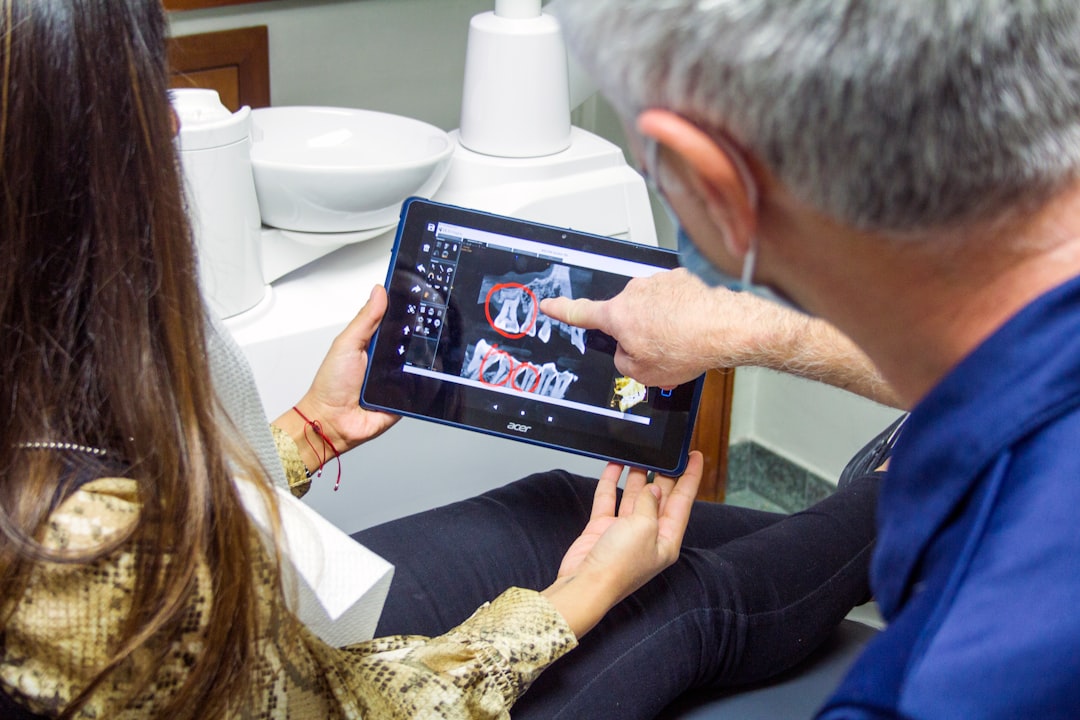
Most offices moved away from film years ago, and the difference is bigger than it looks. Digital sensors produce an image in seconds instead of minutes, use meaningfully less radiation than traditional film, and let your dentist zoom in, adjust contrast, and compare the image side-by-side with a previous visit instantly. That last part is something I ask about directly — seeing this year’s x-ray next to last year’s makes it obvious whether something is actually changing or just looks concerning in isolation.
Intraoral Scanners
If you’ve had a small wand waved around your mouth that builds a 3D model of your teeth on a screen in real time, that’s an intraoral scanner — and it’s replaced the goopy impression trays a lot of us remember from getting a retainer or crown made years ago. Beyond just comfort, the digital model is more precise, can be sent electronically to a lab or an in-office mill, and gives you an oddly satisfying rotating 3D view of your own teeth that most dentists are happy to show you if you ask.
CBCT (Cone Beam CT) Scans
This is the one that surprised me most when I first encountered it as a patient rather than through my work. A CBCT scan produces a full 3D image of your jaw, teeth, and surrounding bone structure — genuinely different from a flat 2D x-ray. It’s typically used for more complex planning: implant placement, evaluating impacted teeth (wisdom teeth especially), root canal complications, or jaw joint issues. Not every visit needs one, and the radiation dose, while still low, is higher than a standard x-ray — a reasonable thing to ask about if it’s recommended: “why a CBCT specifically, and what will it show that a regular x-ray wouldn’t?”
Why This Actually Matters for You as a Patient
Beyond comfort and speed, this technology changes the conversation you can have with your dentist. A rotating 3D model or a side-by-side x-ray comparison turns “trust me, you need this” into “look, here’s exactly what I’m seeing and why.” I ask to see whatever image is on the screen every time, and it’s made me a far more engaged, informed patient than I used to be.
Frequently Asked Questions
Is digital x-ray radiation actually safer than traditional film?
Yes — digital sensors require significantly less radiation than traditional film to produce a usable image, on top of the convenience benefits. It’s still a good habit to mention any recent medical imaging you’ve had elsewhere so your provider has the full picture.
Can I ask to see my scans and images during the appointment?
Absolutely, and most offices are set up to show you right on the same screen they’re using. It’s one of the most useful questions you can ask — seeing it yourself makes any recommended treatment far easier to understand.
Do I need a CBCT scan for a routine cleaning?
No — CBCT is reserved for more complex diagnostic or planning needs, not a routine check-up. If one is recommended at a regular visit, it’s worth asking specifically what prompted it.